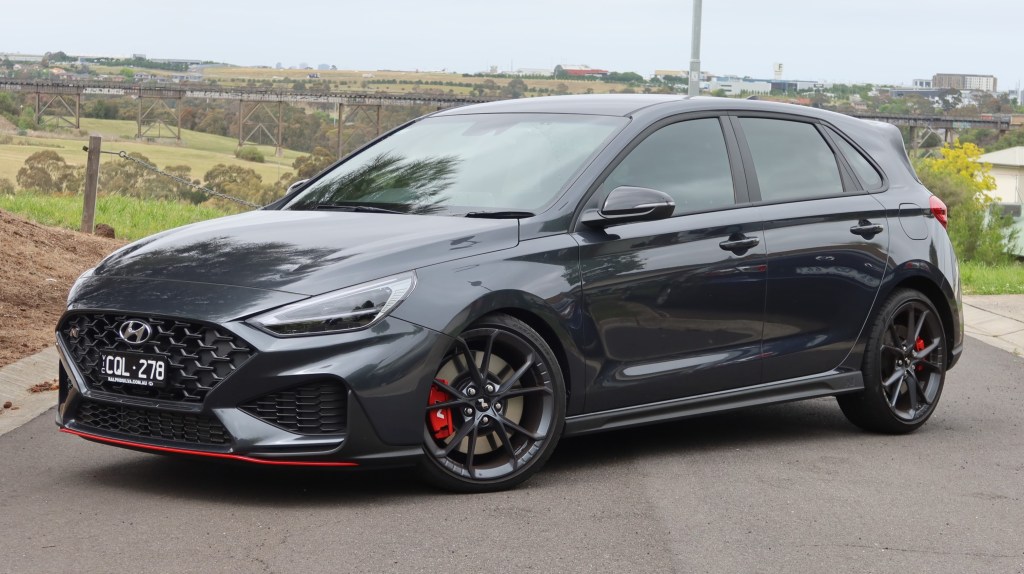
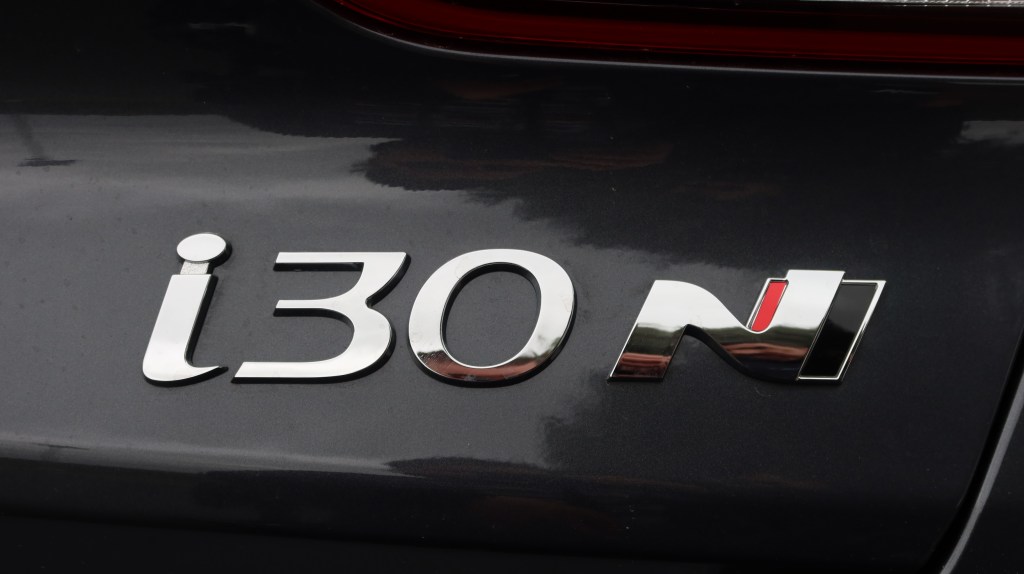
Hyundai started life as South Korea’s answer to Toyota, VW and Ford in that it aimed to provide cheap, reliable transport for the working-class citizen. Performance cars were a long way from the minds of the head honchos in Seoul, but sometime in the 80’s they tried and failed miserably with the comically named “Scoupe”. Their follow up in the form of the Tiburon wasn’t much better, but a few years ago Hyundai headhunted a BMW engineer from the M division to create their own performance division: N. This single letter supposedly stands for the Nurburgring; the longest and most challenging race track in the world. It’s significant because all the N models are tested and developed there, taking the hot hatch fight straight to the Europeans. The N badge has gone from strength to strength, showing up the established players and creating a new generation of “hero” cars for the people, so you could imagine my excitement when my friend Kyle told me he bought an i30N Hatchback. It’s an excellent choice that provides all the performance and practicality you could ever need.
The best thing about Hyundai’s N division is the emphasis it places on driving pleasure. Instead of chasing big HP numbers and 0-100KM/H times like the Germans, it focuses on providing fun, involved experiences that can be thoroughly enjoyed on the road. This philosophy has earned praise from the motoring press and enthusiasts alike – a long way from the crappy Excels that used to get stolen all the time. Yes, for many years Hyundai were the butt of many car jokes with their questionable build quality and crappy engineering, but no one is laughing now. In fact, the whole car industry in South Korea is at the forefront of design and technology, keen on filling the gaps left by other manufacturers who no longer care about sporty cars. The South Koreans now have the money and resources to make a myriad of vehicles for everyone, which I believe is a huge win for the industry. Kyle was obviously smitten by this little cracker and I can’t fault him for thinking that. I would buy one too if I could, because I’m sick of seeing Golf R’s and RS3’s being driven by people who only care about winning races off the stop lights.
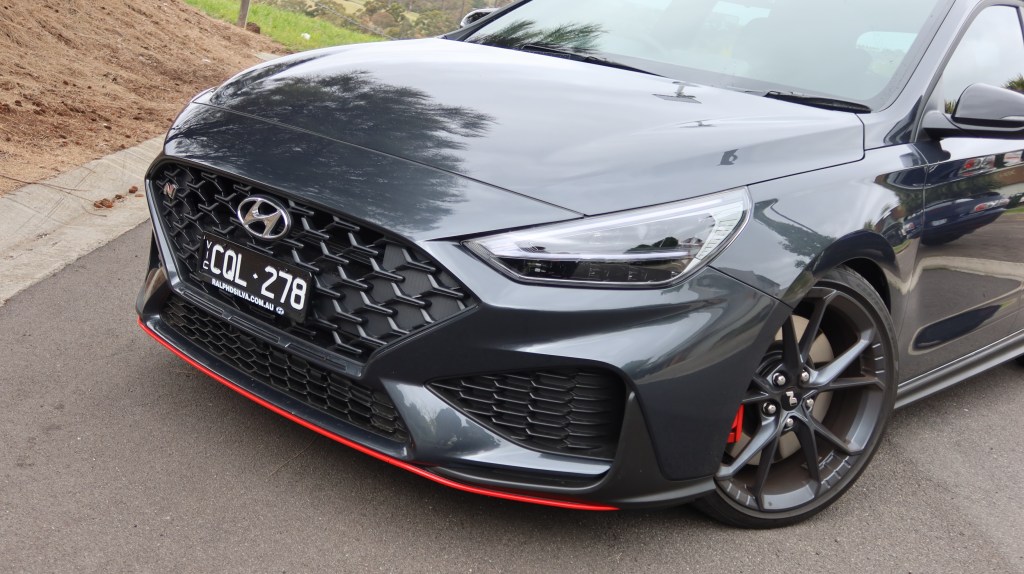
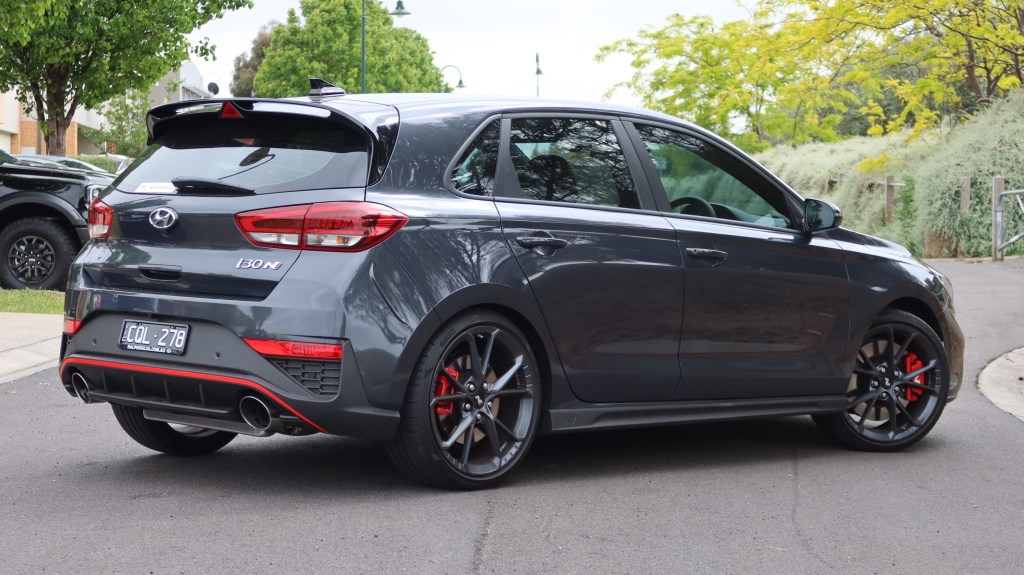
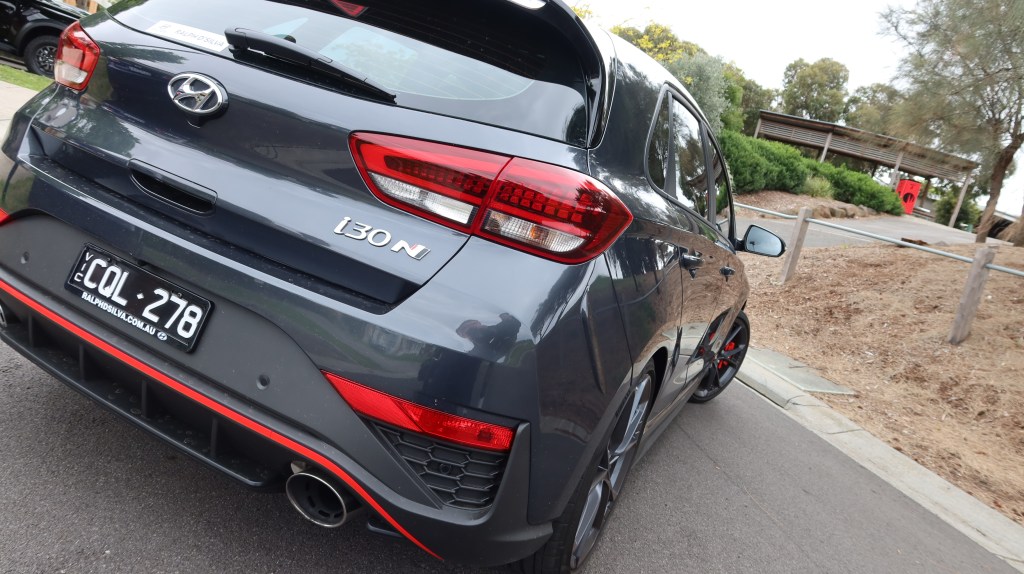
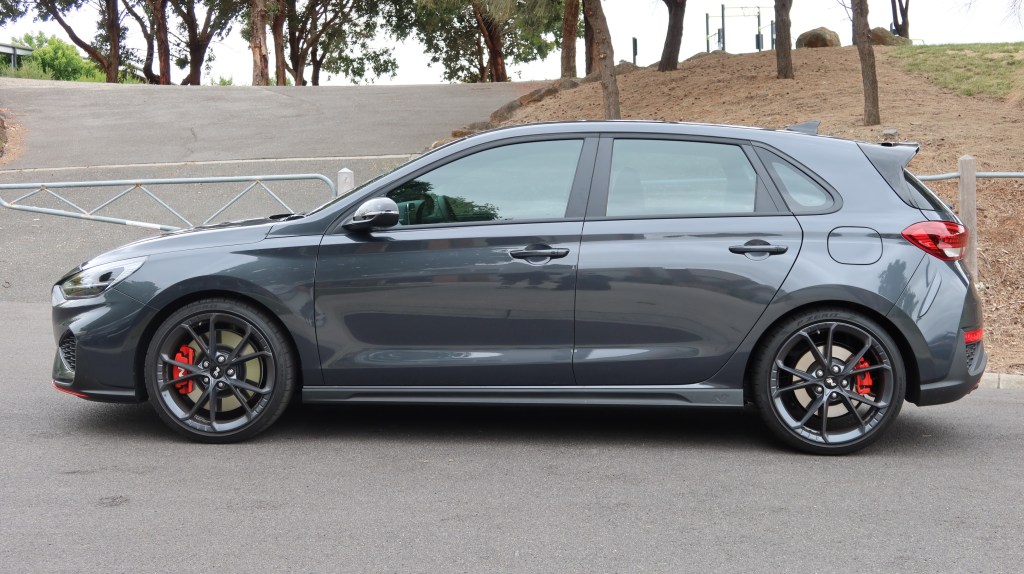
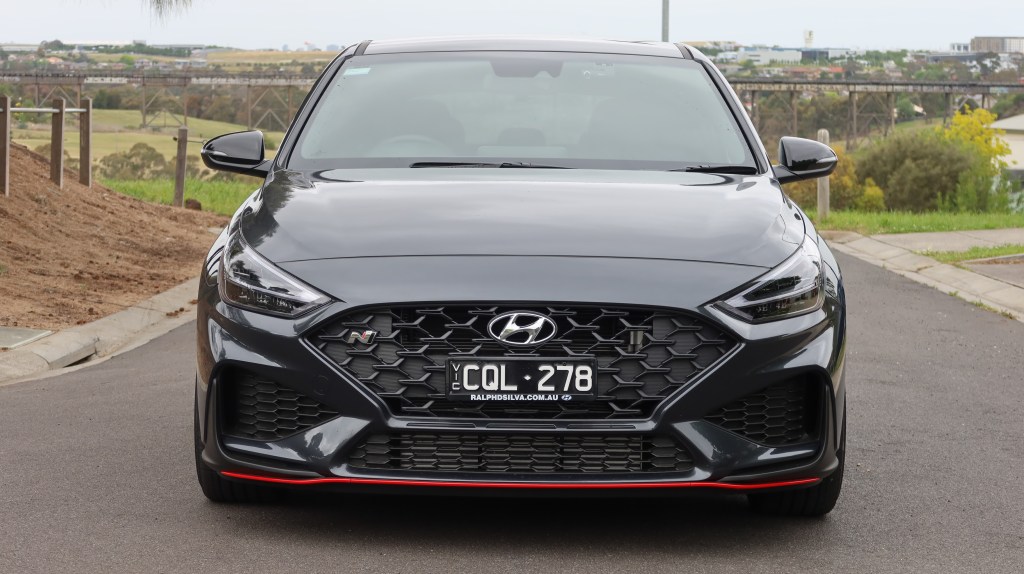
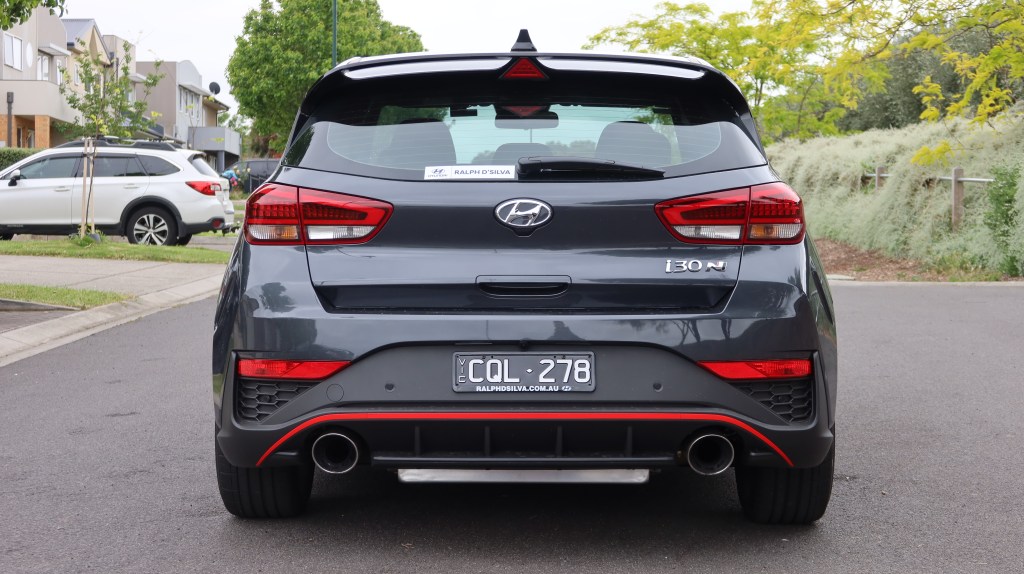
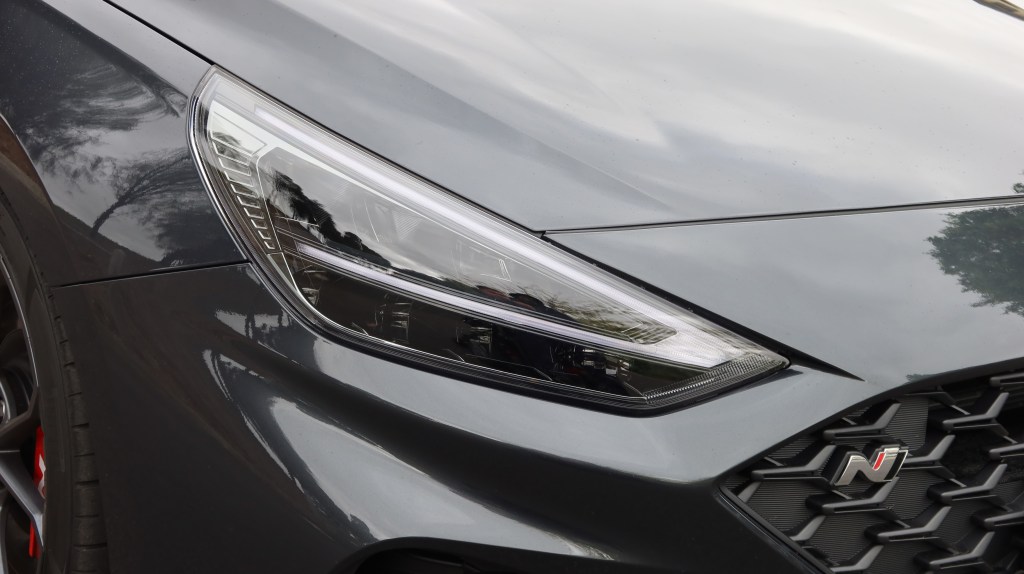
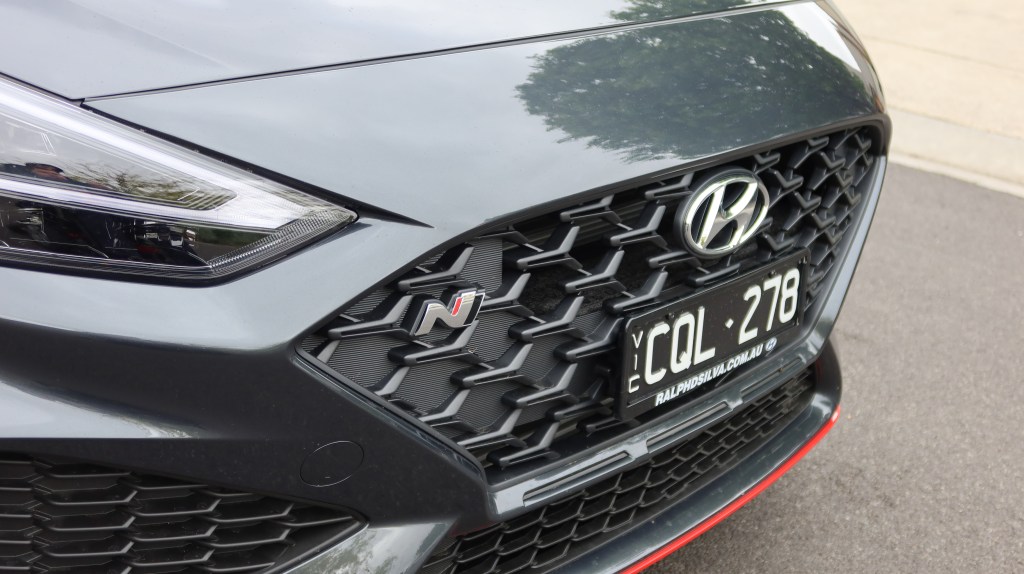
The thing that really strikes me compared to the first i30N is the styling. No longer it is cutesy and innocent with a conservative design approach that doesn’t compliment the performance. I mean there were a few design elements to let people know that something was different compared your Nan’s car, but not enough. Hyundai was obviously aware of this and added some much needed visual flair with sharper lines and more angular grilles for the second generation. The changes have worked a treat, but I have to say the combination of red accents, brushed grey alloy wheels and “Dark Knight” paint helps it here. May not be the combination I’d go with but I won’t hold it against Kyle because isn’t matte black. Anyway, the styling has some substance in that you have functional air vents sending air to the front brakes, with the added effect of better aerodynamics. This also helps to explain the holes in the rear wing. So many cars have these redundant “appearance” packages to artificially enhance the look without actually improving the performance, but the N division doesn’t do this. It would never stoop to that level.
An interesting feature that Kyle mistook for a roll cage was a torsional rigidity bar inside the boot. The “roll cage” is more or less built into the chassis like all cars with a monocoque/unibody construction, but only the most hardcore performance models have a visible piece of metal running from one side to the other. But what exactly does it do? Why would a car need something like this? It’s not going to break without it, is it? Fortunately, it’s not integral to the car’s construction so it won’t break if it’s removed, however you wouldn’t because the handling would be compromised. Even though aluminium is a strong material, the chassis can still flex a tiny bit and you don’t want that in a performance car designed for spirited driving. A stiff chassis is key to maintaining a good balance during hard cornering, for it allows the suspension to work better and put more tyre on the road more of the time. All of this equates to more grip and more fun, which is only a good thing for those who want to push their car to the edge. I’m not saying that Kyle will just yet, but I’m sure he’ll try when there’s an opportunity to do so.
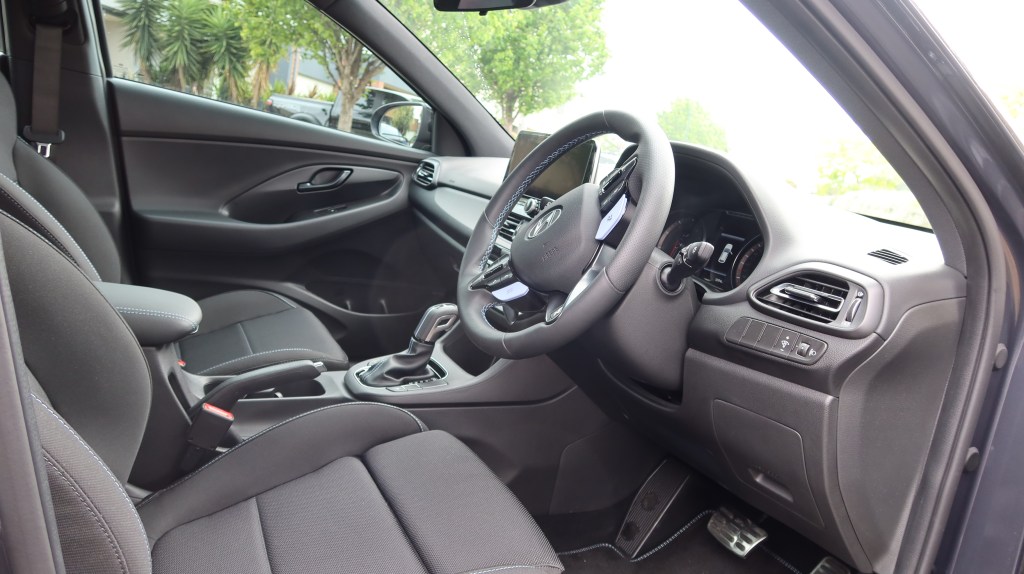
At this point you probably want to know the power figure from this turbocharged 4 cylinder. It produces 206KW and 392NM which is perfectly ample for a hot-hatch; particularly a front wheel drive one. This is coupled to an 8-speed DCT transmission, delivering seamless acceleration that makes full use of the engine’s power. For street driving, it’s a good amount that can provide more than enough thrills when things get tight. Some of the 4 wheel-drive hatchbacks struggle to fully exploit their power and may not deliver the same kind of connection to the road, but with a front-wheel drive car like this, there’s more feedback and agility. Moreover, the car doesn’t rely on as many electronic assists to keep it planted, reducing the complexity and service costs. Sometimes less is more and Hyundai have kept to the basic principles of a performance car, which ultimately boil down to the chassis, weight and suspension setup. Get all of these things right and you’ll have a cracking car on your hands. The philosophy is very much in tune with the likes of Porsche and Lotus, which is especially admirable in this day and age. Sure, they care about power to an extent but they don’t make it a priority. Handling and driver involvement comes first because with out it, it’s going to be stale like a Golf R. The team inside the N division have openly expressed their desire to create cars that excite the senses without the ridiculous price tag. They aren’t the heroes we expected but they’re the ones we deserve.
It’s no secret that there’s a severe lack of “affordable” performance cars on the market these days, which is a shame because cars shouldn’t just be mundane pieces of transportation. Luckily, Hyundai is changing this and models like the i30N highlight their dedication to the cause. Even with the continued and I believe questionable push to EV’s (that’s a whole story in itself), the N division will keep building performance cars for the masses. I can see this brand expanding rapidly over the next few years, and Kyle should feel very pleased to be a part of this ever-evolving story. The N badge has become one of the most respected in the automotive world, so there’s no shame in owning one. Trust me mate, you won’t get laughed out of Cars And Coffee if you turn up in this.
 DevMacCars