
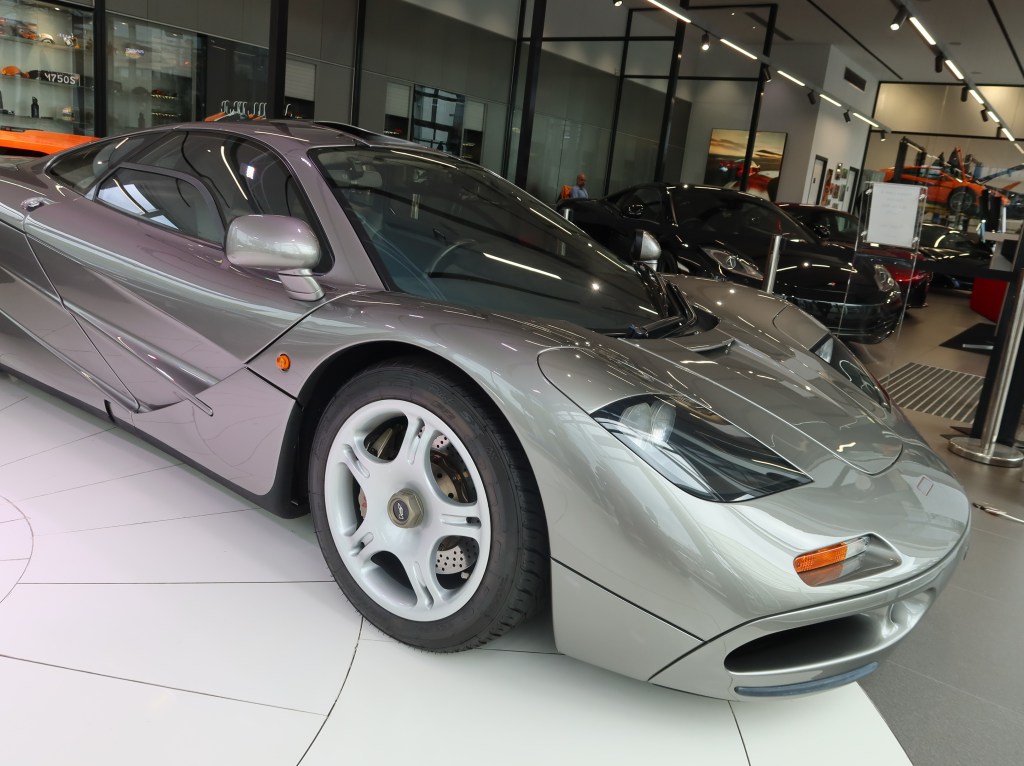
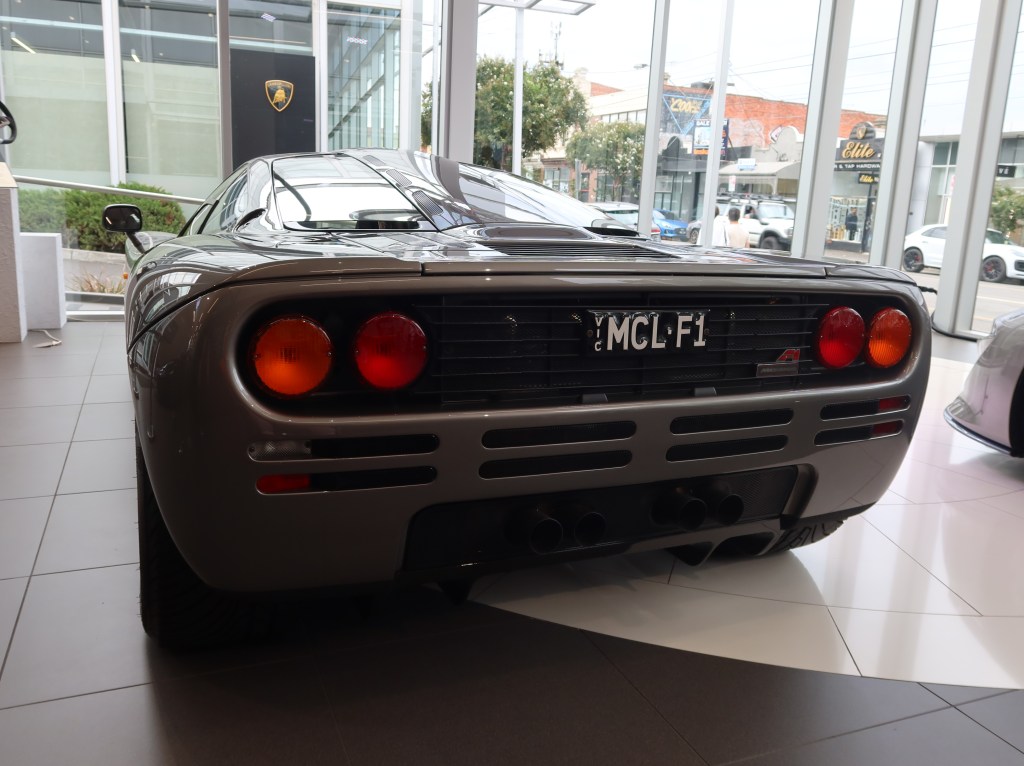
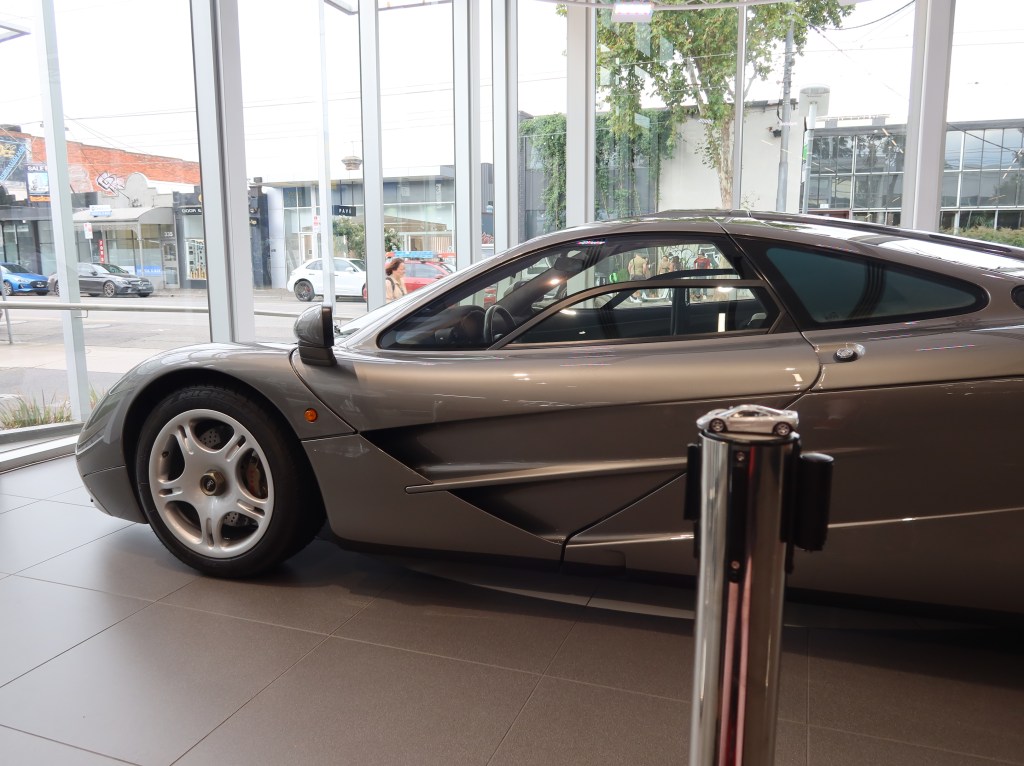
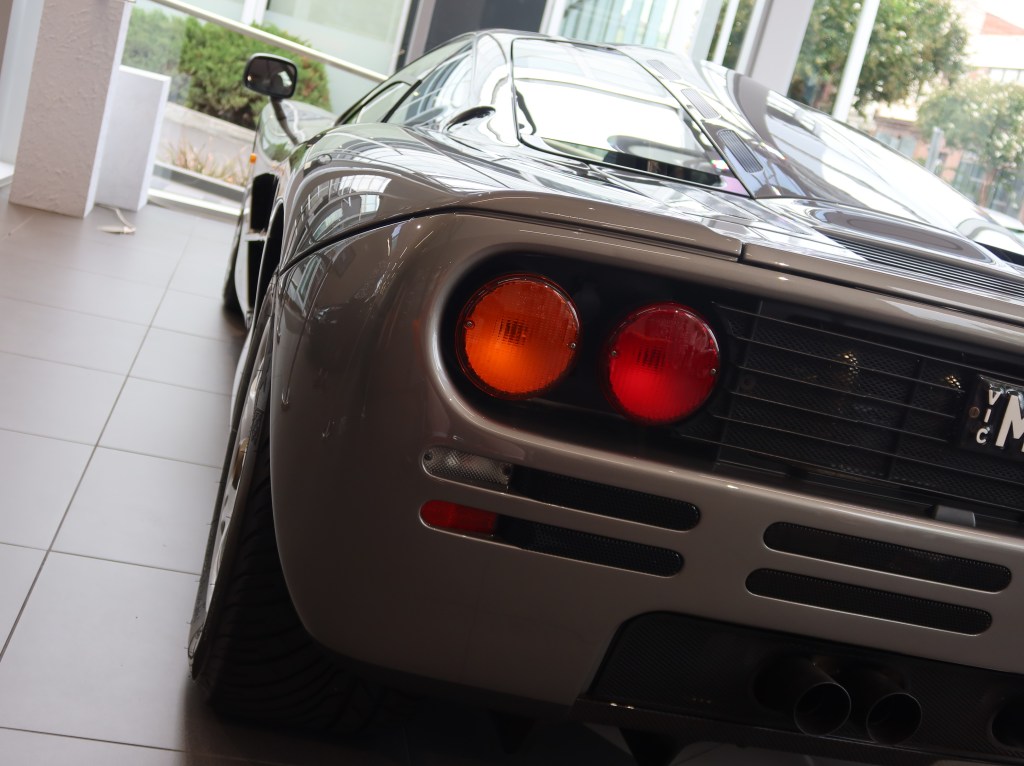
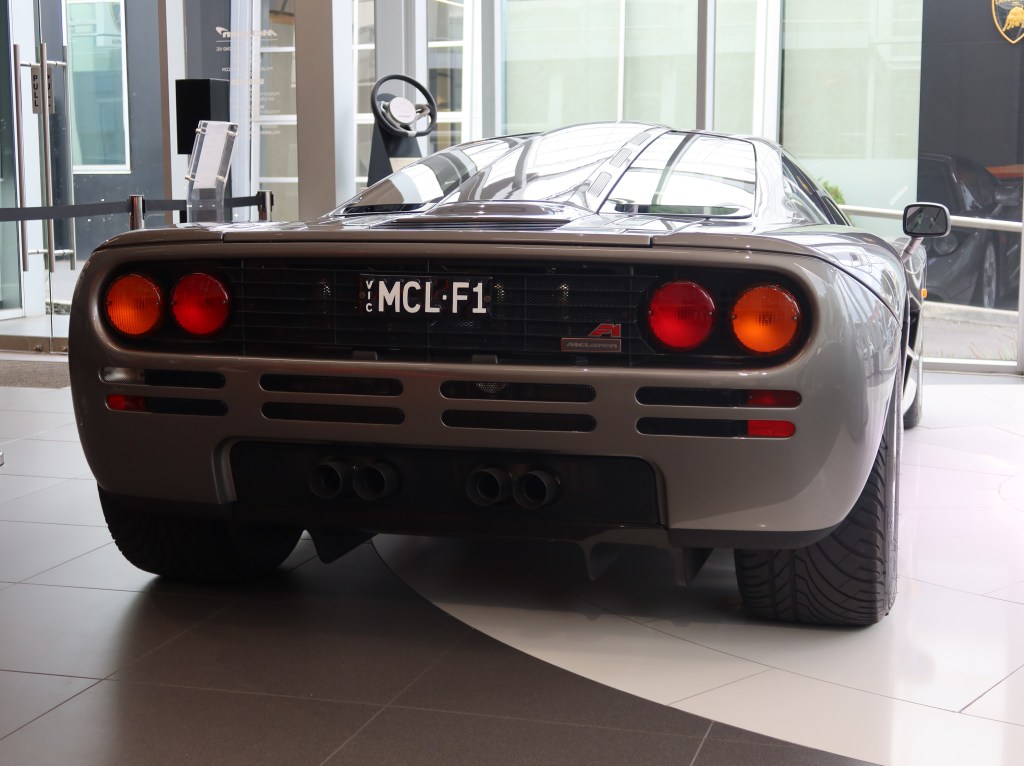
The word icon is thrown around a lot these days, but it’s not always used the right way or for the right reasons. Sure, some things are truly deserving of icon status, yet many things simply are not. I don’t think everyone knows the meaning and gravitas that comes with such a label, but in the case of the McLaren F1, icon is a perfectly fitting title for what many say is the best car ever made. This bespoke machine, designed and commissioned by the great Gordon Murray, aimed to provide the best driving experience possible for the road. The fact that car enthusiasts still go crazy for this vehicle says everything you need to know about it’s historical significance. This particular F1, which I think was owned by Lindsay Fox for a number of years, doesn’t appear very often so being able to see it in the McLaren dealer alongside a Speedtail of all things is very special. Technology has moved a long way in 30 years, but the F1 still demands attention wherever it goes.
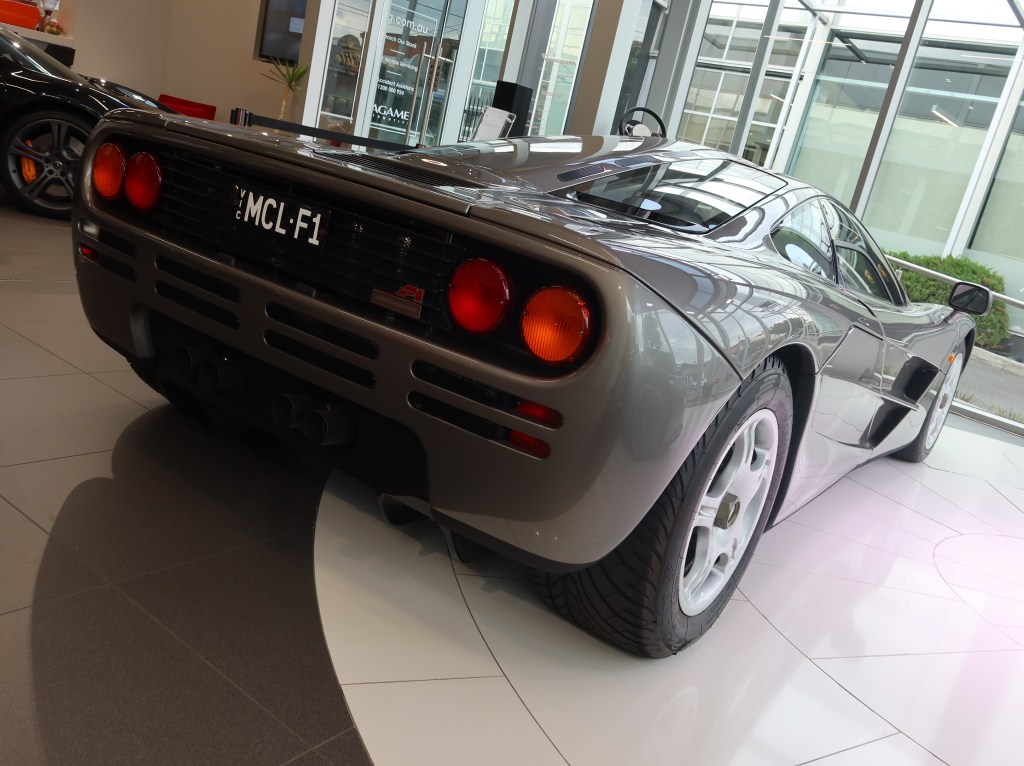
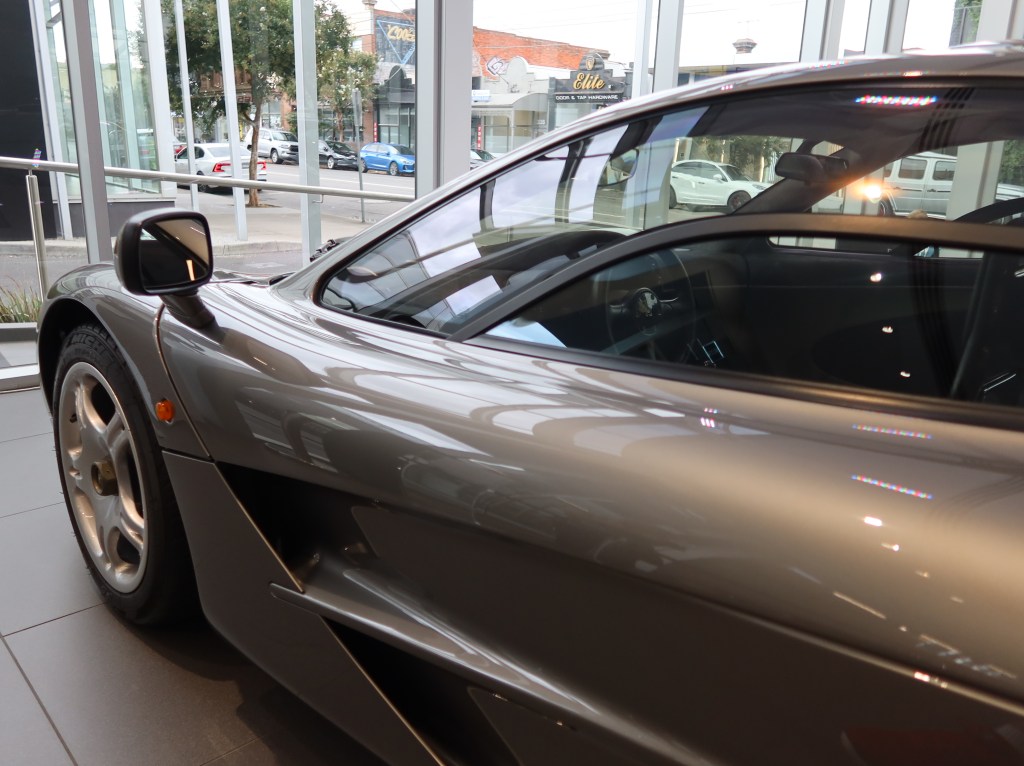
So why is the McLaren F1 deserving of icon status? Well let’s start with the man behind the machine – legendary Formula 1 car designer Gordon Murray. In the 70’s and 80’s, he pushed the boundaries of motor racing technology, coming up with designs that challenged the status quo and gave championships to the likes of Nelson Piquet (Brabham), Ayrton Senna and Alain Prost (McLaren). He helped create the all-conquering MP4/4, which won 15 out of 16 races – a win percentage record that was only just surpassed by the Adrian Newey designed Red Bull RB19, winning 21 of 22 races in the 2023 Formula 1 season. With that kind of rap sheet, it’s no surprise that the McLaren F1 blew everything out of the water. Murray’s objective was to create “the ultimate road car”, so top speed wasn’t really the main objective for the project. Instead, it was to give the driver a totally unrivaled sensory thrill with the best engine, the best chassis and the best aerodynamic aids. However, Murray was not keen on electronic assists, so the car doesn’t have traction control, ABS or any other fancy trickery to dull the experience through your right foot or indeed your arms as you sit in the middle of the car. Unlike many other supercars, the F1 is unique as it has 3 seats. The passenger seats are wedged into the cockpit on opposite sides of the central driver’s seat, so you can share the fun with an extra friend. The car also has an active rear spoiler, a rear diffuser and some small, hidden fans underneath which suck it to the road and produce extra downforce.
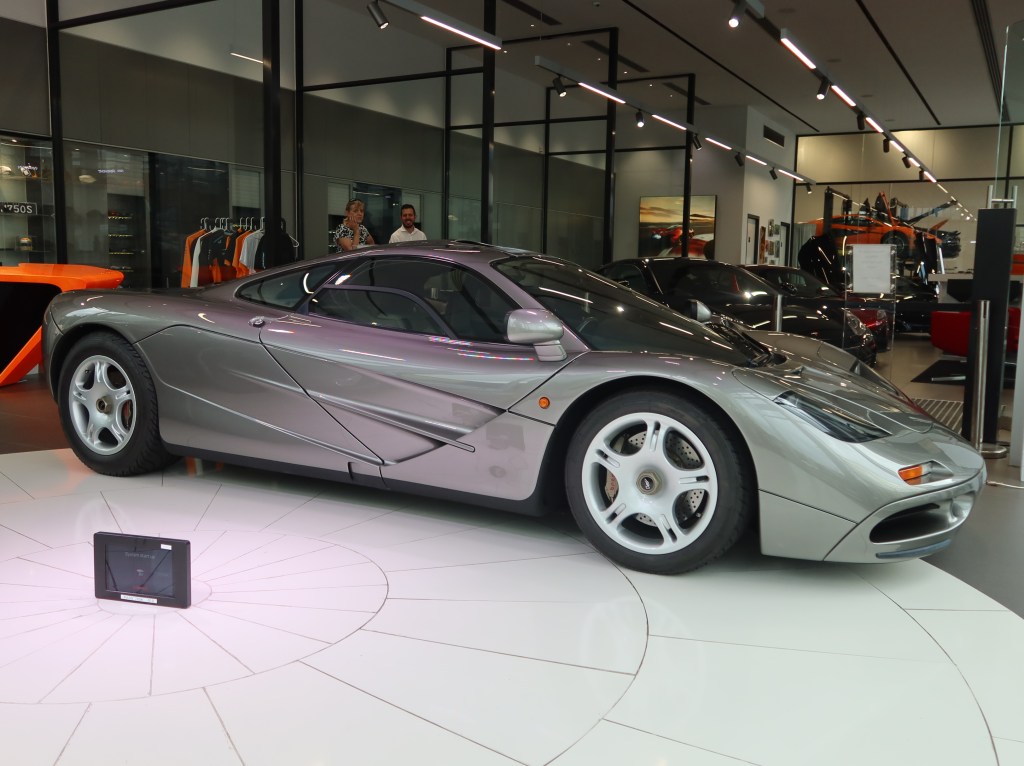
In the early development phase, Murray approached Honda in Tochigi to see whether or not they could build an engine for his new car. Honda was the engine supplier for the McLaren Formula 1 team and had achieved great success, so it was an obvious choice to visit. Unfortunately, Honda decided against building an engine, leaving Murray out in the cold. Not to be broken by this setback, he went over to BMW and laid out his proposal. The famed Bavarian brand had established a strong reputation for building engines, and Murray believed that if anyone could do it, it’d be them. After much discussion, BMW agreed to build the bespoke V12, which they would christen as the S70/2. This absolute unit of an engine, displacing 6.1 litres without any forced induction, produced 618 HP. It may not sound soo crazy these days, but back in 1992 it was the most powerful production car in the world. Nothing of the sort had ever been done before, and with the use of an innovative carbon-fibre monocoque chassis, it wasn’t going to come cheap. When it was the new, the car cost 1 million dollars, which also made it the most expensive ever sold. The public were totally floored by the insanity of the cutting edge building processes, the power of the engine and the size of the price tag. However, like all proper sports cars, the F1 was a lightweight that tipped the scales at 1,132 KG – a figure that some small hatchbacks struggle to achieve today.
Another distinct feature of the F1 is the gold heat-shielding inside the engine bay. Such a big, naturally aspirated engine needs to be kept in a specific temperature window to maintain optimum performance, and when you’re trying to minimise weight, big fans and radiators are far too cumbersome. Gold is a great material for heat dissipation, allowing the engine to sit at a safer temperature and reduce the likelihood of a failure. It may not be the most complex tool, but it’s a very practical one. No matter where you look, it’s very clear that only the best tools and techniques were used for the construction of this incredible machine. What’s more is that it completely destroyed the production car speed record in 1998 after being sent down VW’s high-speed test track. It cracked a mind-boggling 386 KM/H, beating the Jaguar XJ220’s record by 37 KM/H and cementing itself in automotive history. Yes, several cars have exceeded the record since but they’ve all had turbos, which means that the F1 is STILL the king of naturally aspirated cars. However, the redline for the car was raised to 8,300 RPM from 7,500 RPM to achieve this insane number.
This car’s incredible story doesn’t end there though, because in 1995, a race-built “GT-R” variant won the biggest motor race of them all: The 24 Hours Of Le Mans. Entered as a GT car, the #59 entry run by Kokusai Kaihatsu Racing out of Japan beat the troublesome prototypes to take a stunning overall victory. The car’s ability to soldier on in inclement weather and fantastic reliability was something for the ages, a fact made even wilder when you consider that Gordon Murray never wanted the car to go racing. However, demand for the vehicle in competition spec was soo significant that McLaren caved in and made the GT-R variant. A regular runner in the BPR Endurance series (forerunner to the FIA GT Championship), it proved to be a dominant force for a brief period of time before moving into GT1 competition with the “longtail” version. The success would not continue though, as it got destroyed by the Mercedes CLK-GTR. Still, a Le Mans victory for a road-based car is extraordinary, because the feat can never be repeated – unless the proposed Aston Martin Valkyrie LM Hypercar wins it.
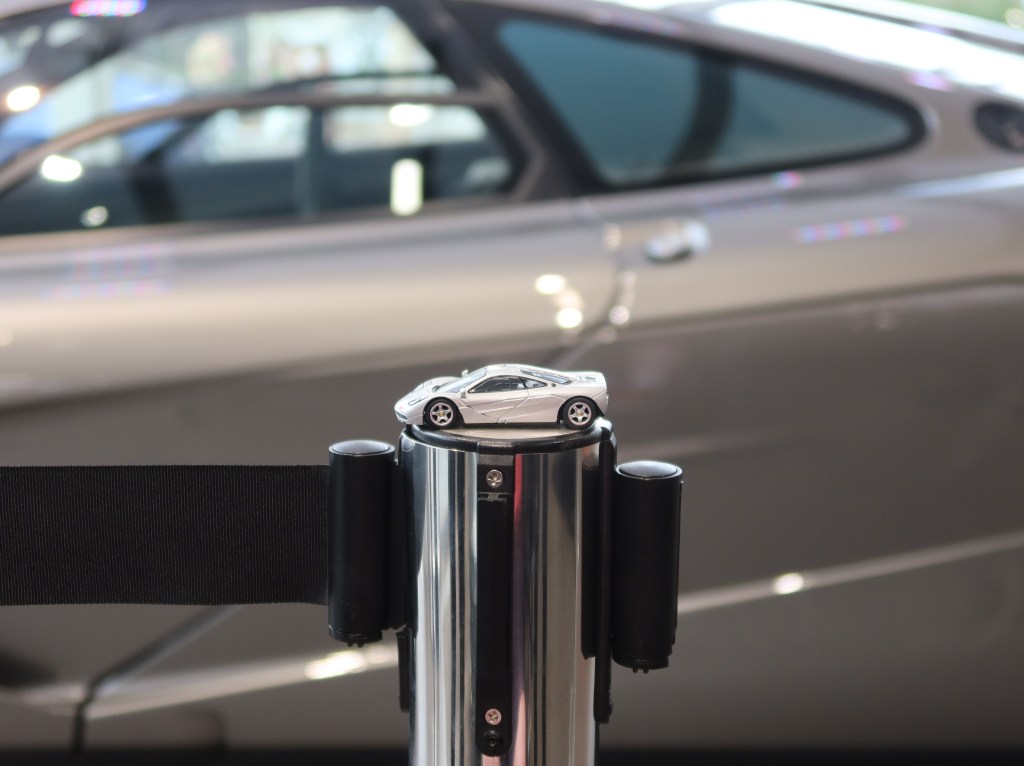
How does one sum up such an icon? Put it this way: if an alien civilisation encounters us in the future, we should show them this as a marker of what we as humans are capable of producing – alongside the Saturn V rocket, the Shinkansen and the Boeing 747. Forget the Bugatti Veyron, this car will stand the test of time in the design and technology space for many years to come. It was a landmark achievement in the history of the automobile and being able to see one in my own city is like meeting a celebrity. The only thing that’d make it better would be meeting Gordon Murray in person… What a car. What a legend. What an ICON.
 DevMacCars
One response to “Why The McLaren F1 Is An Icon”
One of my fondest memories in Motorsports is to have watched Nelson Piquet at the wheel of a McLaren F1, during a weekend of racing in my hometown, Curitiba – Brazil . The fans wanted to see the McLaren racing against the Ferrari F40 and we packed the stands. Piquet won the Sunday morning race and he and another F1 were easily leading the afternoon race when the driver of the F40 in P3 decided to give them a hard time. He dropped the hammer and was, in fact, closing the gap but after 3 laps going flat out, the Ferrari’s engine blew up right in front of the stands. The crowd went wild!!!!!
I totally agree with you, it is an iconic car.
LikeLike